
Always Tired? Your Body May Be Asking for More Vitamin B12

Share
Feeling tired after a long day is completely normal. But what if the tiredness never really goes away?
You wake up feeling exhausted, struggle to concentrate during the day, feel mentally foggy, or simply don't have the same energy you used to. Many people automatically blame their hectic schedules, lack of sleep, work pressure, or stress.
Sometimes, however, there may be another reason worth paying attention to: vitamin B12 deficiency.
Vitamin B12 is one of those nutrients your body needs in relatively small amounts but relies on for several important functions. And in India, B12 deficiency and low B12 levels are common concerns, particularly among people whose diets may not provide enough of the nutrient.
Some studies have reported that a significant proportion of Indians have inadequate B12 levels, with estimates around 47% in certain populations and studies. The exact prevalence varies depending on the population studied and how deficiency is defined, but the larger point remains important: B12 deficiency is not something that should be casually overlooked.

What Does Vitamin B12 Actually Do?
Vitamin B12 is involved in several essential processes happening inside your body every day. It plays an important role in red blood cell formation, normal neurological function and DNA synthesis, while also contributing to normal energy-yielding metabolism.
1. It Helps Your Body Make Healthy Red Blood Cells
Your red blood cells are responsible for carrying oxygen throughout the body.
B12 is essential for their normal formation. When you don't have enough of it, your body may struggle to produce healthy red blood cells, which can contribute to certain types of anaemia.
This is one reason B12 deficiency can sometimes be associated with symptoms such as tiredness, weakness and low energy.
And that's where things can get confusing.
You may think you're simply overworked or not sleeping enough, when your body could actually be dealing with a nutritional deficiency.
2. It Matters for Your Nerves and Brain
B12 isn't only about energy.
It is also important for maintaining normal neurological function. Your nervous system depends on B12 for processes involved in maintaining healthy nerve cells and the protective myelin surrounding nerves.
When B12 levels are low, some people may experience symptoms such as tingling, numbness or a pins-and-needles sensation, particularly in the hands and feet.
Some people may also report difficulties with concentration or a feeling of mental fogginess.
Of course, these symptoms can have many different causes, so persistent or unexplained symptoms should never automatically be attributed to B12 deficiency alone.
3. It Helps Your Body Release Energy From Food
Here's an important distinction: B12 doesn't work like caffeine or an instant energy booster.
Instead, it is involved in normal energy-yielding metabolism, helping your body use nutrients properly.
That's why maintaining adequate B12 levels is important for normal everyday functioning. If you're deficient, correcting that deficiency can be an important part of getting your nutritional health back on track.
Why Can B12 Deficiency Be Easy to Miss?
One of the biggest problems with nutritional deficiencies is that they don't always announce themselves clearly.
There isn't always one obvious symptom that tells you, "This is B12 deficiency."
You might simply feel more tired than usual. Your concentration may not feel as sharp. You may experience weakness or unusual sensations in your hands and feet.
And because these symptoms overlap with everyday problems like poor sleep, stress and a demanding lifestyle, B12 deficiency can easily go unnoticed.
This is particularly relevant for people following vegetarian or vegan diets, as naturally occurring vitamin B12 is found predominantly in animal-derived foods. Older adults and people with certain gastrointestinal conditions or absorption issues can also be at greater risk.
But Getting Enough B12 Isn't Only About What You Eat
This is where the story becomes a little more interesting.
Even when someone consumes vitamin B12, the body still has to absorb and use it effectively.
Vitamin B12 absorption is a complex process involving the stomach and small intestine. Intrinsic factor, a protein produced in the stomach, plays an important role in the absorption of dietary B12.
Certain medications, gastrointestinal conditions, ageing-related changes and other factors can interfere with B12 absorption.
So simply saying "I eat enough B12-rich foods" doesn't always tell the complete story.
If you have ongoing symptoms or are concerned about your B12 status, testing your levels and discussing the results with a healthcare professional can provide much more useful information than guessing.
Is There a Better Way to Take Vitamin B12?
Traditional B12 tablets and capsules remain a common way to supplement.
However, not everyone enjoys taking pills every day.
Some people forget them. Some dislike swallowing tablets. Others simply want a more convenient option that fits naturally into a busy routine.
That's where sublingual vitamin B12 sprays offer an interesting alternative.
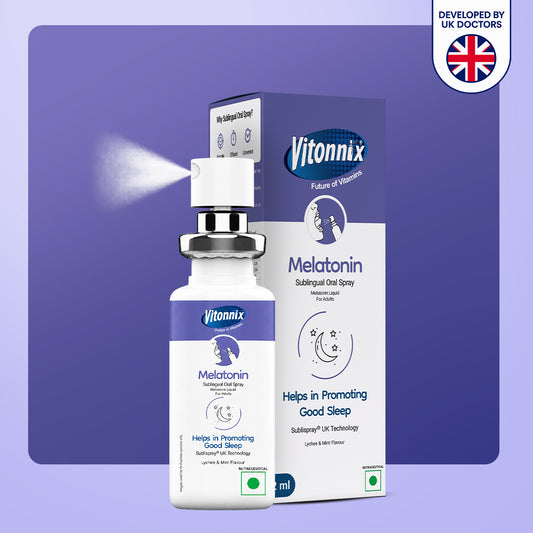
A sublingual spray is used under the tongue, where the formulation is held for a short period before swallowing, depending on the product's directions.
The biggest advantage for many people is simply convenience: no tablet to swallow, no glass of water and no complicated routine.
It's a quick step that can easily become part of your everyday routine, whether you're getting ready for work, sitting at your desk or travelling.

Why a Sublingual B12 Spray?
The area under your tongue contains a rich network of blood vessels, which is why sublingual delivery is used for certain types of supplements and medicines.
However, it's important not to treat every sublingual product as automatically superior to an oral supplement. Absorption depends on the specific formulation, dose and individual factors.
The real advantage of a well-designed B12 spray is that it combines a convenient format with a simple, measured way of taking your daily B12 supplement.
For someone who doesn't enjoy swallowing pills, that can make consistency much easier.
And when it comes to supplementation, consistency matters.
A Simpler Approach to Everyday B12 Support
Your nutrition doesn't need to become complicated.
You don't need a cabinet full of supplements or an elaborate morning routine. The first step is understanding what your body actually needs.
If you're experiencing persistent tiredness, weakness, tingling, numbness or unexplained changes in concentration, don't simply assume you need more caffeine or more sleep. These symptoms can have many causes, and B12 deficiency is one possibility worth discussing with a healthcare professional.
For people who do need B12 supplementation, choosing a format that is convenient enough to use consistently can make everyday nutrition much easier.
Vitonnix Vitamin B12 Sublingual Oral Spray is designed around exactly that idea - a simple, measured spray taken under the tongue, without the need to swallow another pill.
The Takeaway
Vitamin B12 may be needed in small amounts, but its role in the body is anything but small.
From normal red blood cell formation and neurological function to energy-yielding metabolism, B12 is involved in several processes your body depends on every day.
So if you're constantly tired, don't automatically dismiss it as "just a busy lifestyle."
Sometimes, your body is simply telling you to look a little closer.
Understand your nutrition. Check what your body actually needs. And choose a supplement routine that you can realistically stick to.
Because better nutrition isn't about doing more.
It's about doing what your body needs consistently.