
Taking Iron But Still Feeling Tired? Here’s What Could Be Going On

Share
You wake up tired.
You get through work somehow, but by afternoon, your energy is already gone. Climbing a few stairs leaves you more exhausted than it should. You feel cold more often, your concentration isn't great, and sometimes even your hair seems to be falling more than usual.
So you start taking an iron supplement.
A few weeks pass.
But you still don't feel like yourself.
If this sounds familiar, you're not alone.
Iron deficiency is one of the most common nutritional concerns, especially among women. But here's something that often gets overlooked: taking iron and actually getting enough iron into your body are not always the same thing.
And that is where the conversation needs to change.
First, Why Does Your Body Need Iron?
Iron isn't just about maintaining haemoglobin.
Your body needs iron to make haemoglobin, the protein in red blood cells that helps carry oxygen around the body. When your iron levels are low, your body may struggle to keep up with its normal oxygen-carrying needs.
That can show up in ways you might not immediately connect with iron.
You may feel:
-
Tired even after getting enough sleep
-
Low on energy throughout the day
-
Less focused or mentally drained
-
Short of breath during normal activity
-
Colder than usual, especially in your hands and feet
-
More prone to hair fall or brittle nails
-
Weak or unusually exhausted during your periods
Of course, these symptoms can have many causes. Stress, poor sleep, thyroid problems, vitamin deficiencies and other health conditions can also make you feel tired.
That's why persistent symptoms shouldn't simply be treated with supplements. If you suspect an iron deficiency, checking your haemoglobin and iron status with a healthcare professional is the right place to start.
Why Is Iron Deficiency So Common?
For many people, it isn't simply a matter of "not eating enough iron."
Your body needs iron regularly, and some people have higher requirements than others.
1. Monthly Blood Loss
For women, menstruation is one of the most common reasons iron requirements can be higher.
If your periods are particularly heavy, your body is losing iron every month. Over time, that loss can contribute to depleted iron stores.
This is one reason women may find themselves feeling unusually tired, weak or drained without immediately realising that iron could be part of the picture.
2. Vegetarian Diets Can Make It Harder
Indian diets can be incredibly nutritious, but many common plant-based sources of iron contain non-heme iron, which isn't absorbed as efficiently as heme iron found in animal foods.
Lentils, beans, leafy vegetables, seeds and other plant foods can absolutely be part of a healthy diet.
The point isn't that vegetarian food is "bad."
It's that the amount of iron you eat isn't necessarily the same as the amount your body absorbs.
And that's an important difference.
3. Your Tea or Coffee Habit May Matter
Let's be honest.
For many of us, tea isn't just a drink. It's part of the daily routine.
But tea and coffee contain compounds such as polyphenols that can reduce the absorption of non-heme iron when consumed around the same time as an iron-rich meal or supplement.
That doesn't mean you have to give up your tea
It simply means timing can matter.
Something as ordinary as having tea immediately after an iron-rich meal may not be ideal if you're trying to improve your iron intake.

Then Why Do Iron Tablets Sometimes Feel Difficult to Take?
Iron supplements can be useful and are commonly recommended when someone has an iron deficiency.
But they aren't always easy to tolerate.
Some people experience:
-
Constipation
-
Nausea
-
Stomach discomfort
-
Abdominal cramps
-
An unpleasant aftertaste
And when a supplement repeatedly makes you uncomfortable, consistency becomes difficult.
You may start taking it every other day.
Then you forget it for a few days.
Then you stop completely.
And eventually, the problem isn't necessarily that iron "doesn't work."
It may simply be that the supplement doesn't fit comfortably into your routine.
It's Not Always About Taking More Iron
This is the part that often gets missed.
When it comes to nutrition, more isn't automatically better.
What matters is getting the right nutrient, in an appropriate amount, in a form you can take consistently.
Iron absorption can be affected by several factors, including the type of iron, what you consume alongside it, your digestive health and your individual nutritional needs.
Vitamin C, for example, can help improve the absorption of non-heme iron when consumed with an iron-containing meal or supplement.
At the same time, certain foods and beverages can reduce absorption.
So instead of simply asking:
"How much iron am I taking?"
It's worth asking:
"Am I taking it in a way that works for me?"
A Different Way to Take Iron
This is where the delivery format becomes interesting.
Traditional iron supplements are usually available as tablets, capsules or other oral formats. But not everyone enjoys swallowing pills, and not everyone finds them comfortable to take regularly.
A sublingual spray offers a different approach.
Instead of swallowing a tablet, the spray is used under the tongue, where it comes into contact with the tissues beneath the tongue.
It's simple.
No water.
No swallowing a large tablet.
And it can easily become part of your everyday routine.

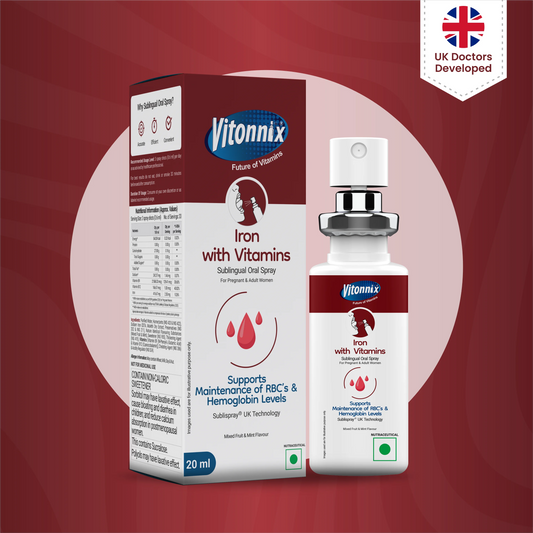
Meet Vitonnix Iron Sublingual Oral Spray
Vitonnix Iron Sublingual Oral Spray was designed for people looking for a more convenient way to include iron support in their daily routine.
Its formula combines iron with Vitamin B9 (folic acid), Vitamin B12 and other supporting ingredients, while its sublingual format allows the nutrients to be delivered through the tissues under the tongue.
The goal is simple:
Make daily iron support easier to take and easier to stick with.
It can be especially convenient for adults who dislike tablets or find traditional iron supplements difficult to fit into their routine.
Why People Choose a Spray Format
Easy to use:
Simply spray under the tongue as directed.
No tablet swallowing:
A useful alternative for people who don't enjoy conventional pills.
Convenient for busy routines:
Keep it with you at home, at work or while travelling.
Designed for everyday iron support:
Iron contributes to normal red blood cell formation and oxygen transport.
Gentler routine:
A spray format avoids the need to swallow a conventional iron tablet.
Who May Need to Pay More Attention to Iron Intake?
Iron requirements aren't the same for everyone.
You may need to pay particular attention to your iron intake if you:
-
Have heavy menstrual periods
-
Follow a vegetarian or vegan diet
-
Have been told that your haemoglobin or iron levels are low
-
Frequently feel tired or weak
-
Have increased nutritional requirements
-
Have a history of iron deficiency
However, symptoms alone cannot confirm iron deficiency.
If you're experiencing persistent fatigue, hair fall, breathlessness, dizziness or other unexplained symptoms, it's better to get appropriate blood tests and speak with a healthcare professional rather than assuming you simply need more iron.
Small Daily Habits Can Make a Difference
If you're working on improving your iron intake, a few simple habits can help.
Pair plant-based iron sources with Vitamin C-rich foods such as citrus fruits, amla, tomatoes or bell peppers.
Avoid having tea or coffee immediately with iron-rich meals.
Follow the recommended dosage of your iron supplement instead of assuming that more will work faster.
And most importantly, be consistent.
Nutrition isn't about doing something perfectly for three days.
It's about giving your body the support it needs, regularly.
The Bottom Line
If you're taking iron but still feeling tired, don't immediately assume that you need a higher dose.
Sometimes the bigger question is how you're taking it, how consistently you're taking it, and whether there is actually an underlying iron deficiency in the first place.
Iron plays an important role in red blood cell formation and oxygen transport, but supplementation should be based on your individual needs.
For those looking for a convenient alternative to traditional tablets, Vitonnix Iron Sublingual Oral Spray offers a simple spray-based format that fits easily into everyday life.
Because taking care of your nutrition shouldn't feel like another chore.
Less swallowing. Less hassle. A simpler way to support your daily iron intake.
Explore Vitonnix Iron Sublingual Oral Spray